Picture
Yerushalayim means “Ir Shalom” - City of Peace. And yet, it has been destroyed twice, attacked 52 times, besieged 23 times, and captured and recaptured 44 times. How can this city, so beleaguered by conflict, be named for peace? Is it irony or paradox, or perhaps something more?  

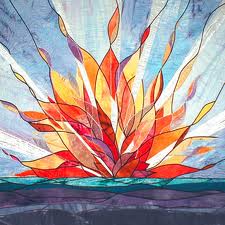
It reminds me of another Biblical paradox – the burning bush. A symbol of the undoing of the natural order, where fire does not bring destruction...on the contrary, it brings revelation. The voice of God calls out from the impossible endurance of a shrub amidst flames. That which should logically be destroyed, endures. And not just endures, but initiates and ushers in what is to become history's greatest symbol of liberation, the Exodus from Egypt. The fiery shrub is the holy ground from which God speaks. 

This paradox of endurance amidst destruction is quite possibly one of the defining characteristics of the Jewish people. The State of Israel has been described as a phoenix, risen from the flames of the Holocaust. But not only is it a country that has risen from the flames, it is a country that thrives amidst the flames of continuing fires of attack from her neighbors. It is a country ensconced in conflict, yet somehow, at its best and highest, remains untouched. 

And so too with Jerusalem. Never before has a metropolis weathered such unending quarrels. And yet, amidst the conflagration, she endures as a city of peace, issuing a message of godliness and the promise of salvation. 

It is said that the burning bush was nothing extraordinary to most who looked upon it. A dozen others walked right past it. What proved Moses’ greatness is that he saw the miracle within it. He turned aside and wondered at it. He heard God’s voice in it. He removed his shoes. 
Sometimes that is how I experience Jerusalem. Usually it is just the mundane domain where I shop and shlep my bags and pay my bills. But sometimes, at the best of times, I turn aside from the mundane drone of my day and see the astounding miracle that is being worked beneath my very feet. 

This Yom Yerushalayim is an invitation to stop and acknowledge the utter miracle of this city. An invitation to hear the voice of God issuing from each alley, each corner store, each traffic jam. This Yom Yerushalayim, may we, and the whole world, see Yerushalayim as a city which sits serene and enduring, offering peace, even amidst the flames. 

The Burning Bush 

Jerusalem, my burning bush
A city so inflamed, 
and yet, endurance is your name.

Here roam my heart & mind
Where, walk me soft, 
and put my shoes aside

and let me admire more 
this site
which burns 
with no less bark
and no less branch
Eternal spark
within its stance

And blaze
My days with hers 
And let no less than all of her endure

And may she brighter burn 
that I may longer gaze and learn –
this mystery of Yours.


Picture
Why are there so many 4’s in the seder? 

First, dimensionality. You take a point, it has no dimension to it. You add another point and you have a line, the dimension of length. You add a 3rd point and you get length and height. But it’s not until you add that 4th point that you length, height, and finally width. 3 dimensions! And that is the world we live in. It’s not a flat world. Only with that 4th point do we get space as we know it. A vessel to receive.

So on our most basic level – we have a Place to exist, breathe, walk around, because of 4ness. That’s why it’s called the 4 corners of the earth.

Another reason I think were drawn to 4’s: stability. We all know you can’t make a table with 2 legs. 3 legs will make a table of sorts, yet 4 legs will make a much sturdier structure. 4 has more bulk, heaviness, plantedness. So 4s adds to our sense of safety, groundedness.

A square is organized, orderly. And that is the power of the seder, really. Seder literally means order. It touches on our deep deep need for order and stability in this world.

In the seder ritual, the 4s really are poured on thick. The 4 questions, 4 sons, 4 cups of wine. Not only do we see a plethora of 4s, but then, so many of the sources draw parallels and correspondences between the different groups of 4. The 4 cups correspond to the 4 mentions of redemption and to the 4 exiles and the 4 worlds, etc…

So not only do we have this question of why 4’s…but also a question of ‘Why so many correspondences’? Drawing parallels gives us a sense of cognitive Order. It makes sense of an otherwise senseless world. Correspondences create SEDER.

Sarah Yehudit Schneider shares a teaching from Rav Ginsburg who says that Kabbalah is the “science of correspondences”. Kabbalah is usually understood to mean ‘to receive’. But this meaning only appears in later prophets/biblical writings. In the Torah itself, its 3 letter root means “to parallel or correspond.” It refers to the corresponding loops on the Tabernacle’s curtains. (Exodus 26.5)


Kabbalah is all about making correspondences. Making deep sense of all that is.

So the fours that fill the seder create a wonderful experience of:

Dimensionality

Place

Stability

Sense

All of these elements create a structure, the paradoxical structure that allows us to feel free.

4s usher in our freedom.   


Picture
Sweet little Torah I just heard from R'Nissan Kaplan of the Mir Yeshiva. Why is it that we sing at the end of seder "Ehad mee yodeya?" "Who knows One?" Because all of our preparations and the entire seder should be training us to know immediately and automatically the answer to that question. Of course, G-d is ONE. G-d is Oneness! And I would add, not just to know the answer - but to experience the answer...to experience that oneness throughout our entire being!!


The parsha deals extensively with the people’s offerings towards the building of the Mishkan; the mobile Temple known in English as the Tabernacle. Midrash HaGadol takes the 15 materials donated to the Mishkan's construction and likens them to components of the human being. The gold corresponds with the soul, the silver with the body, flax with the intestines, and on and on. This evocative midrash clearly equates the house of God with the human being. Indeed, one of the most commented upon lines in the parsha is, “And let them make Me a sanctuary that I may dwell – b'tocham – within them.” (Exodus 25:8) Grammatically speaking, one would expect the text to say 'build me a sanctuary that I may dwell within it.' But let there be no mistake, the simple read of text is clear, God will dwell withineach of us. Build it and He will come – right into our very selves! The parsha's barage of details about an external building project all point to a quintessentially internal domain.

But how do we Torah-readers of today fulfill this injunction for internal construction? How do we create God's abode within us? I think one hint is in the fact that the very first appearance of the mishkan in the Torah is explicitely linked with the people bringing offerings.1 The concept Mishkan is necessarily linked to the idea and ideal of 'giving'/teruma. It is the act of offering which moves God to dwell below. God promises that when we give the best of ourselves...then we will come to enshrine divinity.

And more than that – this is not merely individuals making their contributions in a vacuum. No, this is an overtly communal endeavor. The Torah teaches a timeless model of the sanctity born from a communal pooling of each person's gifts. Mishkan is a Biblical model for conscious community where its members are actively offering up their best, whether through artistry, wealth, knowledge – in acts of gracious contribution to the whole. Lucky are we who find ourselves in such consecrated communities.

This week's parsha invites each of us to look at our lives and decipher what offering are we destined to bring to the communal pool of sanctity. What is it that you and you alone can offer to your community, your people, our shared world? What is your unique contribution that throws up the walls for a dwelling-place for God? The teruma challenge – to chose one thing you can do today to actualize that divine injunction of offering from the generosity of your heart and the creative ingenuity of your spirit. (Please see past poetic commentary pieces at www.havayah.com blog)

  The Offering

List here
Under ‘gifts’
- the donations of my lips

You want blue – have my veins
Purple, take this flesh
The soft of my face
– your ram skin dyed red

My scalp - the tachash hide
The shittim wood - my bones
Oil for lighting – take these eyes
For sweet incense – my nose

Take spices from beneath my tongue
My kidneys - shoham stones
place these upon the altar of community
with tithe of blood, edom

Set my heart like gemstones
Upon the priestly breast
Take flax from these intestines
for goat hair, take this tress

The cooper is my calling voice
Silver, are my limbs
The gold, bestowed with all my soul
that God might dwell within

And with these sinews lodging light
I donate
every breath
to house the gusty word of God
in sanctuaried dress

and let us dwell well on these words
that tether us to sky
to ground the clouds
in temple'd shrouds
to bound the boundless light

with tangled wools
of what to give
with talents on display
through artistry, ingenuity
in gemstone states of grace

God's firey image on the mountain
chiseled into life
reified and actualized
tactile and enshrined

Palpable and muscular
expressive, copius
God is sparked in all our arts
when we wield our will to give

so grant the gemstones of yourself
an airing among friends
and Gods best garment and blessed apartment
will be your life and limb
 
 
This week we read parshat Mishpatim, the parsha of “Laws”. Amongst the plethora of laws there inscribed is the well-known injunction of 'ayin tachat ayin - an eye for an eye'. It states that if there is an injury, the penalty should be an eye for an eye, tooth for a tooth, wound for wound. The sages agree that the implications of such a law are barbaric and greatly at odds with the moral endeavor of Torah. In the movie The Fiddler on the Roof Tevya sums up this Jewish sensibility when he quips, “If everyone lived by 'an eye an eye' and 'a tooth for a tooth', the world would be blind and toothless.” Indeed, according to halacha (Baba Kamma, 84a) an 'eye for an eye' comes to be understood to refer to monetary compensation for physical damages.

And yet the glaring question stands, if this legality was not meant to be taken literally, then why is it worded in such a potentially misleading manner? Commentators offer a rich round of rationals, each with their own beauty and merit. I would like to offer an additional layering of explanation. An explanation based on the mystical belief in the radical oneness of all existence. For, from the mystical perspective of ultimate unity, the injured and the injuror are in fact one and the same. When I take your eye, I am taking my own, for we are inherently intertwined. From this enlightened vantage point, the notion of 'an eye for an eye' is less of a prescription than it is a description. It does not so much prescribe what should be done in a case of damage, as it describes what actually metaphysically occurs in the course of an injury.

Thus, 'an eye for eye' can be read not as a civil law of an ancient society, but as a metaphysical law of the universe. It's an elegant expression of the very basic fact of the oneness of all people, whether friend or foe. Most particularly when were talking about our enemies does this unitary view-point shudder forth in its most challenging grandeur. When we are able to apprehend the truth of oneness even and especially with our foes, then we are privy to the highest and most subtle of mystical truths.

In her invaluable book, “You Are What You Hate”, Sarah Yehudit Schneider weaves together Hasidic and Kabbalistic sources which offer a vision of a spiritually productive approach to enemies, a vision based on the notion of ultimate unity. She writes that our enemies hold fallen slivers of our souls. In fighting us they are trying, albeit in a deluded way, to connect back to their root, which really is within us...We cannot complete our life mission until we have collected those scattered pieces of ourselves which are embedded within our enemy. An essential step in the collection of these scattered shards is the awareness of our enmeshment with the very ones who would do us wrong. Our own redemption comes when we recognize the metaphysical fact of unity even with our enemies.

The injunction here in parshat Mishpatim thus stands as a testimony to a state of unitary consciousness. And from that apex of interconnection flows ultimate compassion and the sanctification of life itself. As it says in Leviticus (19:18), “Love your friend as yourself: I am Hashem.” The Hebrew word for friend, rayech, paradoxically shares the same root as rah, the word for evil. We could thus reread this pivotal line as, “Love your evil like yourself”. What's more, the phrase that follows, “I am Hashem” takes on new meaning. For when we are able to love another, particularly an enemy, as ourselves, then we meet and access the deepest knowing of Godliness. So may it be in our days that our conflicts are unraveled and laid to rest with the knowledge of our essential and overwhelming interconnectivity and oneness.

The poem below elaborates upon this idea of the interconnection between the injured and the injuring. It is a statement of mystical unity.

Eye for Eye

Read crime-in-all
...not criminal
- ours to contain
- ours to dissolve

Let's sentence self
til spoken right

Lest one hand stab
the other in spite

In spite of self
and body same
my cripple
crafts the other’s maim

The convict with conviction calls:
“We are a chain
en-chained to all.
And I myself will not be free
til jury claims its injury.”

“And I’ll not give a guilty plea
Til judge confess
his Culpability”

An “eye for eye” 
and “tooth for tooth”
encodes this law
of vastest truth

that we are all
but one and same
to injure other
inflicts our pain

And lest our world end
toothless, blind
let disparate sparks unify

and only then, 
enrobed as One
will we behold
the clinching bond

with sight restored
and toothy grins
with bruises cured
and wounds on mend

we'll calm our clans
so vengence clad
and guard eachother's eyes and hands

that we may have the sight to see
an age of peace
sans injury


and share the shards 
held in-between
these hands
we palm with enemies

and once where blind
now vision blessed
to see how friend and foe
enmesh

*

Sources from Rav Kook on unitary consciousness:

The Superficial and the Profound

There are two ways of looking at the world: the viewpoint of unity and the viewpoint of separation.

The viewpoint of unity looks at the entire vista of individuals separated from each other as no more than an error of the senses and a lack of illumination. But the truth of reality is simply one great unity. The many, variegated beings are merely particular expressions-different limbs, various colors and hues-of that one, unified uniqueness.
 **
In this viewpoint of unity, you look upon the whole. Then, automatically, an accounting of goodness emerges. Everything together is certainly good-with an ultimate goodness-much better because of the revelation of its evil parts than if those limbs, those means of expression, had been lacking.

To the degree that this unifying recognition grows deeper and stronger, so is its truth revealed in its penetration to the depths, in its rule over life.

All feelings proceed in accordance with the nature of that unifying recognition. Everything is felt with the feeling of goodness.

Then goodness grows stronger-goodness upon goodness. Joy rises above joy; life more glorious upon life.

The more that this unifying view strikes deep roots, the more does it bring actualized goodness into the world: life and peace.
**
Opposing this supernal viewpoint is the separating viewpoint, which sees a variegated reality as the true vision, and claims the foreignness of all details to each other as a true recognition.
The senses and every superficial awareness aid in this. In accordance with this, life grows progressively more corporeal. The greater its effects, so do darkness and evil increase.
**
There is no end to the depth of war between these two points of view: the superficial and the profound.

But all the avenues of cause in the world proceed to one point, bringing into actuality the rule of the unified viewpoint in all worlds, subjugating the viewpoint of separation to itself.

The faith in divine unity is the soul, carrying within itself all the treasure of life, all the inner possessions in which the treasure of all the worlds is stored.

Political leaders and all communal leaders are rooted in the foundation of the viewpoint of separation, in the power of illusion that displays reality in its divided state.

The world is not yet fit for a leadership from the viewpoint of unity, in its purity.

The quality of light of the Messiah, the place of the throne of God in the world-"this is his name that he will be called: The Lord-is-our-Righteous-One” (Jeremiah 23:6)- is built upon the foundation of the viewpoint of actual unity, growing so strong that it penetrates all particulars and all causes.


***
It is necessary that the viewpoint of unity be hidden.

Because of all the unity in existence, because everything is in truth complete goodness from the aspect of its unity, that goodness of constant elevation is not nullified. That constant elevation is marked by the refinement of every particular matter and its elevation.

However, when this illumination of delight is revealed, the pressure and refinement that raise each particular and return every evil to goodness do not grow sufficiently strong.
 
Therefore, it is the hidden nature of the united light that sends forth the inner uniqueness, the essential nature of the unifying light, to the depths of separation. These are the birth pangs and torments that cause the supernal light to be revealed.

The sparks of holiness scattered in the depths of darkness join together, one by one, because of the descent of the supernal, unified light into the depths of hiddenness of the viewpoint of separation.
***
This miracle of the revelation of light of the life of unity in the individual and in the world, with the processes of its ethical nature and its deepest longings-which envelop and permeate everything-is alive. It is alive within Israel.

"His people Israel lives and exists forever."
"The name of the Lord, God of the world is called upon him."
"In the light of His countenance does he walk."
"The Lord his God is with him, and the friendship of the king with him."
- Orot Hakodesh II, pp. 456-58

The Inclusive Path of God

A person who is connected with love to the totality of existence, desiring its rectification and goodness, is also connected to the wicked and wrongdoers within it.

This creates the possibility of damaging the holiness of his pure soul, which desires only holiness and true goodness.

Still, the spirit of the tzaddik, who loves all of existence, grows so strongly with love of all creatures, love of humanity, and, in particular, the love of Israel, that nothing repels him-not even the fear that he himself will become spiritually flawed.

At last, he refines himself so much that he connects himself to the essence of goodness of all existence-everything.
In truth, all existence is always good: "Hashem is good to all."

By means of this love, he rises even higher.

And by means of that spiritual elevation, all of existence rises, until even the evil particulars of the entirety become progressively perfected.

They do so by means of the connection of the spirit of the tzaddik-who truly loves everything-with them.

A person whose way of service this is must refine himself a great deal.

He must be quick and careful so that his actions, thoughts and all his feelings are really given over to the good of all existence. This is really what we can understand of the description of the will of God.

Then, his spiritual thought unites with the oneness of existence, and "evil shall not come upon it."
 ...

That is why we find a natural sense in many people, people who fear God and learn Torah, of only wanting to connect with the love of good people and with the chosen nation.
In truth, this is a fine path for all those who have not properly refined themselves.

But this is not the path of God that is fit for those whose souls are perfected, for those who have the power to refine themselves and their motives.
Such people are obligated, in addition to the special love for the chosen people, to love all existence and to hope for its complete salvation, for the salvation of all particulars of the all with no division whatsoever.

If such people find in themselves any descent or spiritual eclipse resulting from their connection to the totality of existence because of its degraded parts, they do not turn back from the inclusive path of God that is fit for them.
Instead, they hurry to acquire the proper refinement, so that they will be able to be connected to all of existence, from the aspect of the essence of the goodness of Hashem-the true goodness, which rests in Him.
Then their exalted love will not damage them or cause them to descend.
It will allow them to ascend, and it will give them additional purity, strength and holiness.
Orot Hakodesh III, pp. 319-20


Picture
The highlight of parshat Yitro is Revelation at Sinai. The great receiving of the Torah.

In a parallel image of revelation, the Talmud (Niddah 30b) teaches that each of us learns the entirety of Torah while in the womb. There is a candle lit above our invetro-souls and in the drench of that lamp-light an angel teaches us Torah. At our destined hour of birth that self-same angel touches us above our lips, creating the gentle slope indention, known in anatomical parlance as the philtrum.

With that touch we forget all that we have learned in our 9-month tutorial. Life sprawls out before us as an on-going uncovering of all we have forgotten. Each piece of Torah learned is thus imbued with a striking sense of deja vu, of resonance with a truth we have seemingly always known. Torah learning, according to the Talmud's model, is thus seen as more of a recovery, or dis-covery, than a revelation. 

The Talmud makes an implicit link between the external revelation at Mount Sinai and the more internal revelations of the womb. This link can be seen hinted at in a charming play on words – for the word for pregnancy, b'herion, is reminiscent of 'b'har' the phrase meaning 'on the mountain'. Mother's mountainous belly and Mount Sinai are thus parallel locals of highest revelation. 

And yet the Talmud's image of womb revelation evokes questions. Why do we forget the vast knowing locked away in our souls? Why is life predicated on forgetfulness? And, more importantly, how can we access the store-housed knowledge of our souls?

I am reminded of the story of the 'tainted grain' by Rebbe Nachman of Breslav. He tells of a king who is informed by his most trusted minister that all of the wheat in the kingdom has been infected by a certain type of growth that will induce madness in all who eat it. The king's quandary – to have his people die of starvation or to have them go mad with this tainted grain. The choice is obvious, insanity over death. But the next quandary is more complex – do the king and his minister also eat of the grain and join the people in their dementia or do they refrain from partaking and remain sane in the midst of an insane world. Their decision – to consume the grain and join their country-men in madness. With one condition. That they will both make a mark upon their foreheads. A mark to remind them of their insanity. Each time they see this marking on the other's face they will remember that they have forgotten. 

The indention below each of our noses can thus be seen in the same light. When we behold our fellow's face we can be reminded of the Sinai of the womb, of the Torah knowledge that each of us has carefully tucked away. The philtrum reminds us of our own insane amnesia of the truth that rests within. It spurs us to seek out that wisdom and sanity again through our quest of Torah learning. 

The following poem is a prayer of an embryo in the womb. It is a prayer that she will be able to recall the Sinai lamp-light teachings of the womb. And more than to just remember, but also to find the ways to relay that inherent knowing out into an insane world so out of touch with forgotten truth. 

Sinai in the Womb - 

The Prayer of an Unborn Child

Touch me lightly neath the nose
That my lips may part in prose
Let me not forget
You though
I fall into the world

Let luminescence last me still 
and still my heart
With seraph quill
If I fall too far to hear
& memorize your notes

Send a script
A scrap of timber
A stub of finger
'quipped with pencil
May my new-born
have utensils
to inherit as she grows

And I will write what I have learned here
In this hollow, warm and light-filled

So touch me slight
That I may
Recite all that
the angel quill
inscribed upon my soul

And from this amniotic Sinai
I will find the voice to cry
the truth
though all the world
would call it lies

And though I fall
insane, forgetful
slap my lips and
snuff my candle
yet I will remember well
the angel
that taught me all I know

and marked thus with
indentation
I will recall
the revelation
of this loom
where God wove with love
my soul

For Sinai stands
indelible
above our lips
to tell of all
that we forget
as sure as
we are born 
 
So let us thus pursue
Your truths
in deja vu
wrap us well in
what we knew
there in the womb

And Sinai
will be as a mother
enfolding us to rediscover
the radiance lost in the rubble
of the shattered tablets
of Your
Truth


Friends, to read the commentary and see the vidoe on this week's parsha, Yitro, please see the list to the right or type "yitro" into the search window above.  Thanks!
 
 
Picture
This week is Shabbat Shira – the Sabbath of song, of poetry. It is thus named because the weekly Torah reading contains Shirat Hayam, the song sung in exultation after the miraculous parting of the Sea of Reeds. In truth, though, there are two songs sung. One by Moses and the other by Miriam.

The 18th century Hassidic writer the Meor V'Shemesh shares a powerful paradigm-shifting commentary that contrasts these two songs. 

He bases his writings on the Kabbalistic principles of linear verses circular consciousness. According to Kabbalah, line consciousness is essentially masculine. It is hierarchical, progress-oriented, future-directed, competitive; the epitome of the world's current state of affairs. Line consciousness correlates with Moses' song, rendered in the future tense of the opening lines to the song, “Az Yashir – I will sing”.

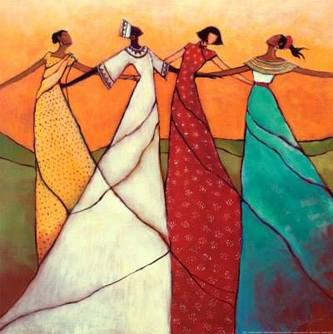
Circle consciousness, on the other hand, is egalitarian, rooted in the present, supportive, non-hierarchical. It is a feminine paradigm. And more than that, it epitomizes Messianic consciousness, the glowing state of affairs towards which our world evolves. Miriam's song, in keeping with good circle consciousness, is thus sung in the present tense with women dancing - embodied - in circular form. Each woman stands equidistant from the center, all with equal access to God. In the circle everyone is holy and wholly rooted in their own source of wisdom. These circle-enacting women, according to the Meor V'shemesh, were able to access a higher revelation than Moses, history's greatest prophet. 

We live in promising times where fundamentals of circle consciousness are at the core of the work that so many of us are engaged in today. I have the honor of leading weekly women's circles here in Jerusalem. Our meetings are based on a model of group work culled directly from what I call, “The Miriam Code” - the enigmatic 2 verses of Miriam's song and dance from this week's parsha. We strive to create a safe and sacred environment for growth by using the circle principles of full embodiment, presence, inclusivity, creativity and a pervasive sense of equality. It is deep and powerful work. (To read more about the Miriam Code please go to: http://www.havayah.com/tools.html)

I bless us all that we may each in our own way taste the fruits of circle consciousness flooding into and rounding out the angles of our all-too-linear world.

The Circle

Women raise your voices 
in rightful raucous!

Beat drum, sing song
and stun anyone
who ever called
you too timid
to sing.

For the Spirit alone
instructs your lips and
limbs as to the allowance
of their bend
and propriety is defined by 
the prophetess
who abides within.

It is she who launches
her loudest campaign
for you to stand and dance majestic
on your life's well-sanded stage.

Sisters, this is why we wear our drums
ready on our shoulder blades.
Ready to up and utter unabashed 
riffs of praise.

Here we are held
responsible to sing
of the God-drenched things
that we have seen.


For we handmaids 
have a mandate to hand-make
our own music,
to move muscles
and meet quotas
of creative output
through inspiration
and through struggle
to sway on sand-dunes 
undone by a tune
to be emboldened
in our God-given right
to self-expression.

So let us ignite each other's
dormant scorch of dreams. 

For ours is a choreography 
of equality
inclusivity
of bringing all-of-me
into this welcoming crucible of
communal commitment
known as a circle.   

Here we offer limbs to reach beyond
the limitations
of a linear world gone wrong.

Embodying ideas 
and idealizing emotion
invoking insight
at the lips of the ocean.

Holding up mirrors
like the windows of waves
-reflecting each other
face to effervescent face.

And so it was, is and will be
in one graceful gesture
at the parting sea. 

That the women set out with clapping feet
to circle in a consciousness
of present tense
and equality.


In Search of Serach


This week we read of the members of Jacob's family who went down to Egypt. There were 53 grandsons listed, but only a single granddaughter – Serach, the daughter of Asher. The commentators wonder, what was so exceptional about this girl that her name was recorded? The Midrash spills forth with stories portraying an image of a unique and endearing Biblical heroine. Serach stands as a trusted, beloved sage of the people. She possessed an uncommon gift of healing through poetry and music. Somewhat as Orpheus is to Greek myth, so is Serach to the Biblical myth – the archetypal poet and bard. 

 The Midrash on this week's parsha tells of the brothers' concern that their father Jacob would die from shock upon hearing the astounding news that his son Joseph was alive and well in Egypt. Their solution – to appoint Serach to the task of sharing the news with him. In one version Serach masterfully waits until Jacob is praying and then relays the news to him through the poetic form of three rhyming lines.1 In another rendering she sings the news to him gently and wondrously with a harp.

 Both versions reveal a girl with psychological insight into just how to approach Jacob with the potentially lethal news. Serach intuits how to tend to Jacob's emotional wounds with song. Even though she was sharing a truth with him, sometimes the sharing of truth with someone can be even more shattering than a lie. Where the bald facts could have killed Jacob, Serach's simple almost child-like rhyme and song healed him, opening him to hope and possibility after decades of despair. 

So what is it about song and rhyme which is able to impart such promise and soothe such wounds? Voltaire is famous for saying, “Anything too stupid to be spoken in words is sung.” And this might be true enough if one were to survey song lyrics for their intellectual content. But God forbid the purpose of music would be deliver intellectual points. No, the great gift of song rests in its stirring of sentiment, its arousal of spirit, its curative catharsis of emotions. Serach, with her ample emotional intelligence and creativity knew how to utilize song, rhyme & poetry for their subtle therapeutic properties. 

May all of our artistic endeavors likewise access healing and inspiration, offering hope and the possibility of betterment in the face of any despair. The poem below is a prayer and request to Serach to instruct us in how to do just that.


Serach, teach us please
 your therapy of harmony 
 - that exquisite technique
 that you work with your speech

Reveal to us, ancient sister
 your mesmeric tincture
 of lyric and meter
 
And mix us well a word elixir
 to soothe the wounds of 
 injured listeners
 
Just the way 
 you sung your way 
 and stood in the way 
 of the heart-halting parade
 of gold-laden wagons 
 sent to stun an old man 
 too fast from his depression

For even one's despair can be 
 a precious thing
 to those who cling to their misery 
 as if it were a love letter
 to the ones they've lost

But you with your harp
 loosened that knot
 on the yarn of a lie 
 that had so long bound

Jacob's beguiled mind
 - as you applied 
 the cautious remedy
 of a child's rhyme2

 Plucked hope back 
 into a ruptured heart 
 and strummed him 
 through the sting and stun 
 of loss 

Suddenly reversed 
 through your verse
 - with the touch of a song 

 For is not the crowning goal 
 of creative endeavor
 to heal the bereaved
 and herald in a better reality? 

So teach us more-loudly your 
 chemistry of composition
 to make what's written
 glisten from the page
 to release vast repositories of pain

To make space for 
 the joyful reception of miracles
 of salvation and spiritual accumulation 
 like wagons laden with bread
 and corn, and a child reborn
 in the midst of a famine

And a lie overturned
 and a family re-fashioned

 So teach us Serach 
 your eternal talent
 of healing hearts with harps 
 and the ancient art 
 of rhyme 

And let it start 
 with these faltering lines
 - a prayer 
 for the gentle unraveling
 of our long-held 
 lies

*

1MidrashHaGadolon Gen. 45:26
  "ויגדו לו לאמר 'עוד יוסף חי'" (בר' מה:כו)  רבנן אמרו אם אנו אומרים לו תחלה יוסף קים שמא תפרח נשמתו.  מה עשו?  אמרו לשרח בת אשר, "אמרי לאבינו יעקב שיוסף קים והוא במצרים.  מה עשתה? המתינה לא עד שהוא עומד בתפלה ואמרה בלשון תימה:יוסף במצרים/ יולדו לו על ברכים/ מנשה ואפרים.  פג לבו כשהוא עומד בתפלה. כיון שהשלים ראה העגלות, מיד "ותחי רוח יעקב אבינו" (שם).  [מדרש הגדול על בר' מה:כו]
  [The brothers said:]If we tell him right away, "Joseph is alive!" perhaps he will have a stroke [lit., his soul will fly away].  What did they do?  They said to Serah, daughter of Asher, "Tell our father Jacob that Joseph is alive, and he is in Egypt."  What did she do?  She waited till he was standing in prayer, and then said in a tone of wonder, "Joseph is in Egypt/ There have been born on his knees/ Menasseh and Ephraim" [three rhyming lines: Yosef be-mizrayim / Yuldu lo al birkayim / Menasheh ve-Ephrayim].  His heart failed, while he was standing in prayer.  When he finished his prayer, he saw the wagons: immediately the spirit of Jacob came back to life.(Translated by Avivah Zornberg in Genesis, the Beginning of Desire, p.281).


Picture


8 Meditations for the 8 Nights of Hannukah

Hanukkah honors the house. It is the Maccabees' renowned rededication of the House, the House of Holiness, the Beit Hamikdash. It is the lighting of the fire in the heart, the hearth, the home of a people.

A Hanukkat Habayit is the celebration of settling into a new home, a housewarming party of a sacred sort. It's as if with every move to a new house we celebrate a miniature Hanukkah. For each home is the manifestation of the Holy Temple in our times, in our own lives. Thus our four walls call for a Hanukkah — a dedication — the lighting of the fire that warms and sanctifies our space.

And Hanukkah's lighting of house is no less than the illumination of the inner Self. For the Self, with her secret stairways, her observing windows, her half-closed doors, is a many-storied home, the abode of the soul. Our task on these eight nights is to rededicate the Temple, in our own times, in our own lives. Each night illumines a different aspect of the self, lighting a new alcove in our inner House of Holies.

*
First Night - Dedicated to Darkness: The Cellar

Before you light your first candle, stand quietly for a moment in complete darkness, and let the darkness indeed be complete, with no want for anything, no need for the distractions of sight, simply sense the quiet self that sits there patiently waiting for you to take notice, to turn off the television, to turn off all vision, to be quiet and sense the sanctuary that is the self.

Standing in the cellar of my self, with an unlit candle in my hand, in the darkness I discover a deeper self than light lets in.

This night I dedicate to inner darkness, to the unknown, unspeakable 
seclusions of the soul. It is the darkness that keeps me searching . . . a worthy opponent,
provoking my path to further reaches, my thoughts to further depths. It is the as-of-yet
unillumined, unanswered aspects of an unraveling self, the landscape of dreams and
nightmares, tragic truths and fears.

I dedicate this night to every question I have quested after, 
to every confusion that has humbled me,
to every challenge I have mastered,
to the thrill of secrecy.

As this candle casts a shadow, my self in dark outline,
I integrate and dedicate the darkness with the light.
The first night is for the dark cellar of winter,
that which illumines a deeper insight.

*

Second Night - Dedicated to Ascension: The Stairway

Standing at the stairs, sights set on ascension.

As you light your candle, envision a stairway rising before you, each step a soul ascension made with a worthy act, each good word you have spoken, each good work done by your hands. See how each step leads to the next. Dedicate yourself to singular steps in an upward direction; go out of your way to do one new kindness every one of these eight days, for each is a link in the ever increasing chain of compassion that stretches out before you.

This night I dedicate to increase, to the second step of every path. This is the move towards abundance, to building in increments, an ordered process. The treasures of the house of Hillel tell of holiness that it should only increase, ever-rising. Thus it was decreed that we light an additional candle to mark each night. For holiness, like light and all luminescent goodness, should always advance, like an ascending staircase, ever more inclined, increased, enhanced.

Just as each good act gives forth another, one spark springs forth to a second wick, while a string of candles await. I stand at the stairway from my depths, ready to rise, to explore. Having found my foundation in the darkness, I move with upward momentum, the second night, the second step, the strength to start....

*

Third Night - Dedicated to Decisions: The Hallway

Imagine yourself in a hallway, an endless corridor stretches before you. This hallway offers options. Each dark wood door opens a different opportunity, each offers an unknowable path, letting you choose, demanding you move, challenging you to act.

Which door do you lunge for?

The hallway is where I will my way through the world. It is the narrowness that leads to expansion, where one knock determines entire destinies. This hallway calls for precision, decision, the analysis of options, the care and the courage to choose true, exact, correct. This corridor is the tension before any great act — when the moment calls for a deeper determination to raise it from the vast heap of mundane happenings, to let it become a great occurrence in the course of life.

This night is dedicated to direction, to making decisions in the dark, to taking the leap of faith that leads to miracles. From the narrowness of the Greek domination, the Maccabees chose no less than the doorway to vastest freedom. They did not remain confined, nor walk through assimilation's passive door, but rather lunged for the doorway of self-dominion and independence, fearless of the fight on the other side.

Standing in a hollow hallway, doorways blind my eyes, I contemplate the path to my future, light three candles as my guides.

*
Fourth Night - Dedicated to the Senses: The Dining-Room

See yourself seated at a silvered table, set stately for some feast, 
You are guest and host and caterer, called to task, to eat.

How full is your plate, how great is your need? Is your spirit nourished as your body feeds?

The fourth night is dedicated to the dining room and her sister space the kitchen. This is the seat of appetite, brimming with all things delightful to the senses. At the center of the table is a fine serving bowl of shemen, olive oil, for shemen is the sign of the paradox of the sensual, where the sublime and the material meet and dine together. Shemen, the anointing oil of Kings, the markings of Messiah, the essential symbol of Hanukkah, is the dripping robe of Redemption itself. It is the nourishment for the candle, that upon which the holy flame feeds. It is the utmost of sublime, but it is also the basest of the mundane. Meaning also "fat" (shuman), it signifies all that is thick and physical, the ultimate image of the material world, where spirit resides.

This night is dedicated to delicate balances 
where our desires come to dine
offering pleasure in each embellishment
fuel for the fire of life
though oil anoints and nourishes,
overpour and it will put out the light.

*
Fifth Night - Dedicated to Defiance: The Outer Courtyard and the Inner Will

See yourself standing in a courtyard stained with suffering. 
Stationed before you are Hannah and her seven sons.
They stare down Antiochus and a torturous task --
denying their identity or facing their death.

They are a family forced to the edge of existence, given ultimatums they refuse to fulfill. You are an observer in the outer courtyard, what says your inner will?

The fifth night finds my strength tested. This night is dedicated to standing strong against external forces, refusing to fold to the host of voices that beckon me away from my core. This is the night of Hannah and her seven sons, caught in an outer courtyard, called upon to convert, to conform to an alien world.

This is a night dedicated to persistence, a night not afraid to sacrifice. It is a night of knowing one's identity, of being grounded in an inner courtyard of calm and courage, regardless of the chaos of the world outside.

In the cold of the outer courtyard, crowded with calls to comply,
I call upon the powers of my own inner will, to courageously defy.

*
Sixth Night - Dedicated to Rebirth: The Bedroom

Your eyes are clouded beneath a canopy, 
your limbs lie in linen, in your mouth one last breath.
Recall the colors of your days, are you satisfied with the path you have tread?
Make peace with your self, and resigned to dying, find yourself re-birthed instead.

The sixth night leads me to the bedroom, painted with scenes of the self in her several stages, the same four walls redecorated and redecorated. For one lifetime witnesses many lives, many bodies worn and shed, personalities developed and discarded, many births and many deaths. Just as Jerusalem's Temple was lost and won and lost again, so too are we forever falling, and redefining, losing and re-finding, a new beginning born with every end.

Nightly I lay my soul to rest here, my breath slows, the world recedes. I experience the end of all, only to dream, and be reborn, burdenless to the morning. The bed a soft cocoon, a womb, a tomb, a room of rejuvenation. These are the four walls of rebirthing — where the bed of birth becomes the bed of death — the drive to end, and to begin again.

The six flames lift from the ash like a phoenix, reviving life in her circular stride. Though history be a looping spiral, Redemption lies at the end of the line.

*

Seventh Night - Dedicated to “Advertising the Miracle”: The Light in the Window

As you stand lighting at the window, raise your eyes to look outside, 
And behold a face before you, some curious passerby
And then realize it is your reflection, in the window glass your own eyes.
What have you seen in the window's mirror? What miracle do you advertise?

The seventh night is dedicated to the window to the world. This is where the strength and purpose that I have nurtured within are celebrated in the sight of others. This is the show of lights that sparkles forth from self. It is the commandment of Hanukkah to pirsum hanes — "to advertise the miracle," the miracle that was wrought in history, and that is wrought within me.

May my eyes behold the miracles shining forth from each passing soul.
As I gaze into their windows may my own miracle be beheld as I behold.

*

Eighth Night - Dedicated to the Transcendence – The Rooftop

Imagine yourself standing upon a rooftop, enacting that ancient human rite of watching the night fall. As the blue deepens into black you witness a single star shutter forth, and another, and another. The darkness kindles starlight upon the sky as surely as you kindle light upon your menora. By the time the eighth star appears the entire sky releases her storehouse of sparks. Dazzled by stars beyond count, you face the seeming infinitity of space. Beholding this limitlessness from your rooftop perch, you are reminded of the infinitity of your very soul. 

The eighth and final light.

The menora stands luminous before us. Ignited in its entirety. Complete. These 8 lights are the grand finale of the entire Hannukah journey. And finales, with all their pageantry  always signal that we have reached an end. Just as the rooftop is the upper limit of the house, this is the limit of our Hannukah lights. And yet, just as standing upon the roof allows us to grasp a sense of the skies limitlessness, looking upon the 8 lights we are reminded of God's light, the 'or haganuz' that has no end.

The eighth and final night is thus dedicated to transcendance. Just as the seven days of the week represent linear time and the completion of the physical, the number eight is an elegant leap beyond the linear, and beyond physicality. Eight represents transcendence  Just as miracles themselves transcend the limits of the physical realm, so does the number eight beckon us to transcendence. 

Although the eighth night is the exuberant end of this holiday, it also hints at the limitless holiness of every day. Yes, there were eight nights of miraculous oil, but beyond that - every day holds its own miracles. When we are in touch with the infinite light of our own souls, the very rooftop of our selves, then we are in touch with the infinitude of God. From that place, miracles are not only possible  they are a given. This final night of Hannukah celebrates our transcendent spirits, and God's promise of His miraculous daily presence in our lives.


ga.type = 'text/javascript'; ga.async = true; ga.src = ('https:' == document.location.protocol ? 'https://ssl' : 'http://www') + '.google-analytics.com/ga.js'; var s = document.getElementsByTagName('script')[0]; s.parentNode.insertBefore(ga, s); })();